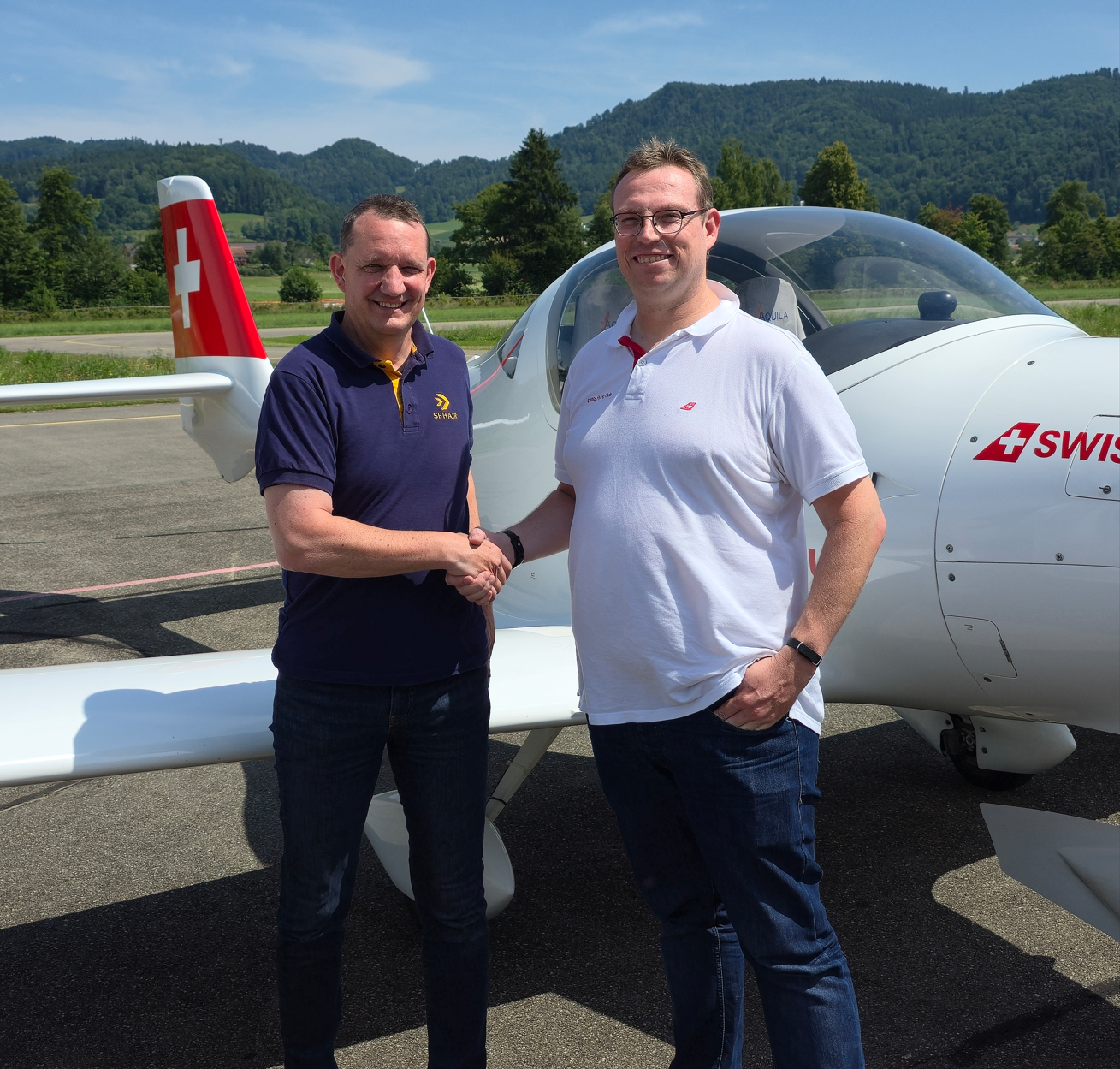
PPL Skill Test Review
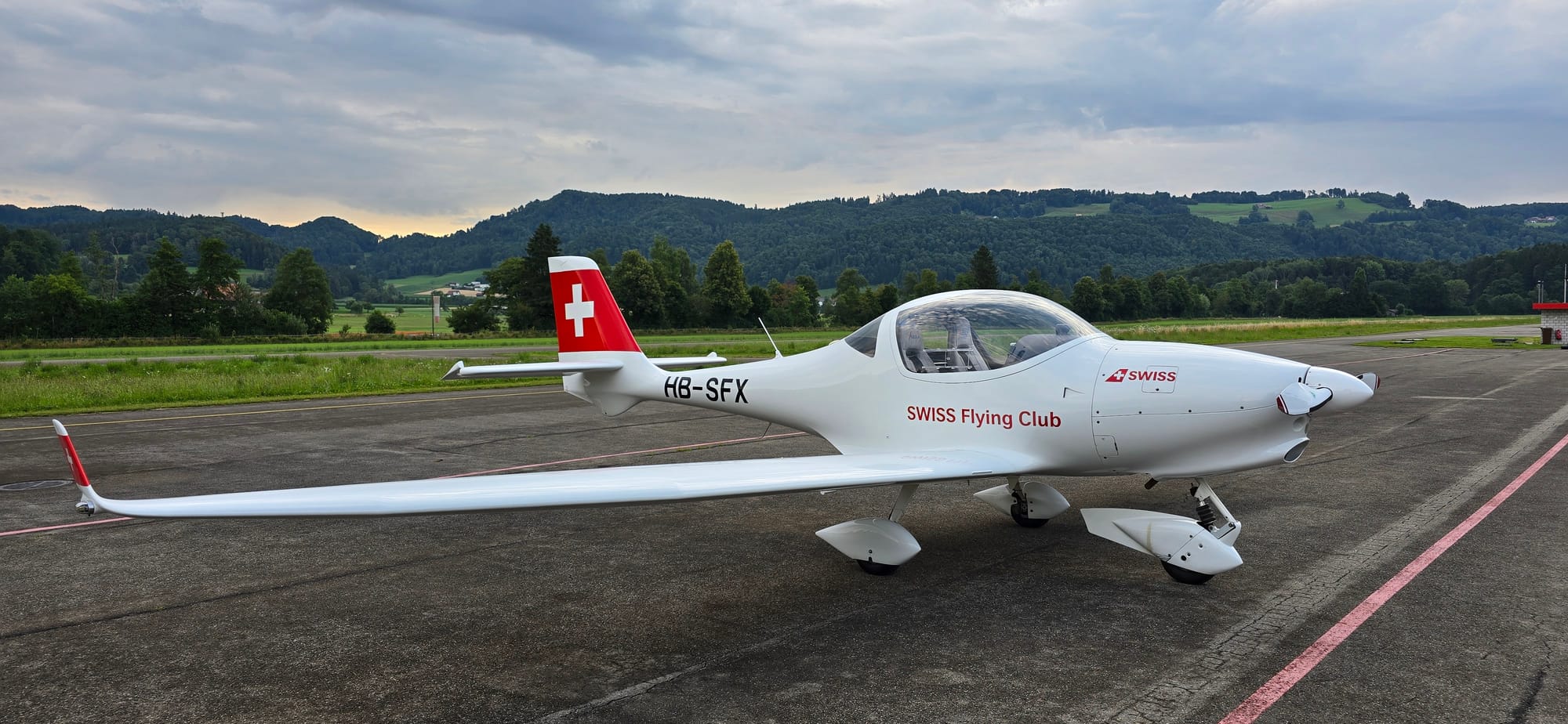
The day finally arrived: 19 July 2025.
Hopefully the day I would obtain my PPL.
Final preparation began two days earlier with a short call with the examiner to confirm expectations. For the outbound leg he would act as a passenger while I flew us somewhere for coffee, following a navigation plan with defined reporting points into a controlled airport. The return would be at his discretion and include manoeuvres en route.
I planned a route from Hausen am Albis (LSZN) to Bern (LSZB) with Grenchen (LSZG) as alternate. Departure would be south from LSZN, then crossing the Emmen (LSME) military airspace area toward Sursee, tracking the WIL VOR, and then direct to point ECHO for LSZB CTR entry. I chose 4 500 ft, as WIL can be busy with IFR traffic above 5 000 ft.
It was a route I had flown before — which carried its own risk of complacency. I had read several skill-test reports where examiners requested diversion to the alternate. I was comfortable with that possibility, but quietly hoped we would reach Bern. It’s probably my favourite controlled airport in Switzerland.
I also prepared a simple GPS-direct navigation plan for the return. I sent both plans to the examiner and received no feedback — which, as the days passed, made it clear that this was entirely my responsibility. I drew the routing on a current paper chart.
Performance planning I completed two ways: first using my usual rules of thumb, then again using AFM performance charts. I prefer working these on paper.
Weather briefings were updated repeatedly as the day approached. The evening before, I called the examiner: confirming meeting time, expected duration, weight and balance assumptions, and a provisional go/no-go based on forecast conditions.
Planned departure was 08:00 local. We agreed to meet one hour earlier for briefing. I arrived two hours before the flight, refuelled, completed pre-flight checks and required announcements, and grabbed a quick coffee before the examiner arrived.
METAR LSZB 190720Z 10005KT CAVOK 23/15 Q1011
We introduced ourselves briefly and began the formal briefing. I presented all documentation and planning. The examiner listened without visible reaction, then asked a few targeted questions on airspace, weather interpretation, and aircraft systems. He explained his role during the flight, and we headed to the aircraft.
Although I had already completed the pre-flight inspection, I performed another quick walk-around to confirm nothing had changed. Once seated, I secured the examiner and delivered a passenger briefing, including the additional considerations of a skill-test flight and how emergencies would be handled.
After engine start and during taxi it finally hit me: this was it. Fear and excitement together. At the holding point for runway 27 at LSZN, I quietly reaffirmed to myself: I have control.
The day was beautiful. Once established in climb I made a casual comment about the conditions, which set a relaxed tone for the flight. I verbalised checklists and procedures, but also kept light conversation — some of his flying background, general chat — maintaining a normal cockpit atmosphere without seeking validation.
Approaching WIL, he assigned a random outbound heading after crossing the VOR. I calculated and briefed it quickly, intercepted the radial, and after tracking outbound he released me back to my planned navigation toward Bern. No diversion. Quiet relief.
The arrival and landing at Bern were uneventful and on target — perhaps slightly fast.
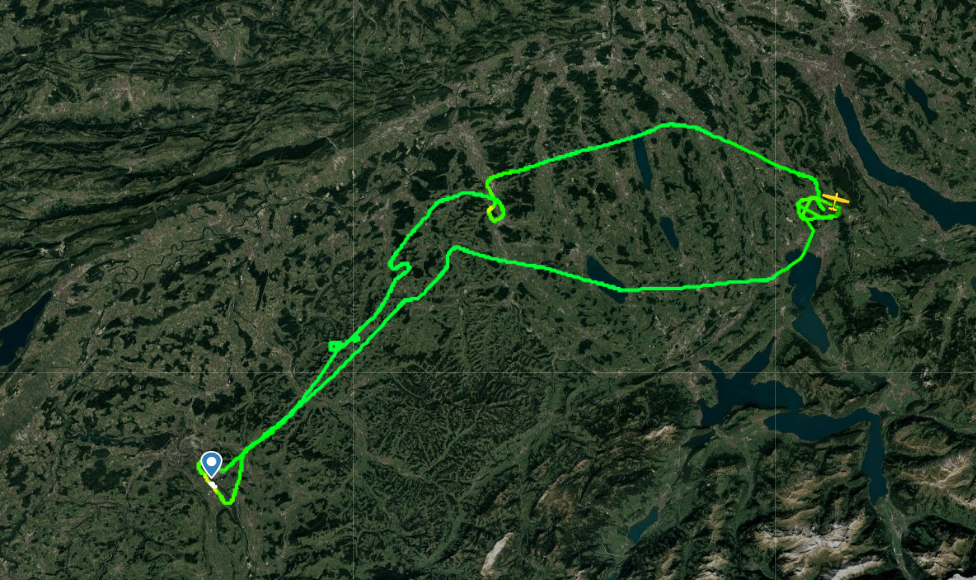
After shutdown we paid fees and, over coffee, briefed the return leg: steep turns, stalls, and a simulated engine-out landing.
Back at the aircraft I performed another walk-around and fuel check. The return briefing was abbreviated, focusing on safety-critical items. We departed eastbound from LSZB and climbed to 5 500 ft.
He requested two steep turns. For the first time in training I remembered my full HASELL checks. I briefed the manoeuvre aloud, noting also a known PFD issue I had previously seen. Rolling into 45° bank with back-pressure applied, the PFD failed mid-turn. I announced the failure, transitioned immediately to the standby attitude indicator, and completed the manoeuvre accurately.
After a brief pause for PFD recovery, we repeated left — same failure, same recovery. Then stalls: power-on and power-off, both standard.
Next came the simulated forced landing. I selected a field quickly, but during setup realised a low ridge lay between us and the chosen site. At about 600 ft AGL my intended landing area was no longer viable. I immediately selected an alternative field just beyond the ridge, slightly further away, and adjusted configuration to preserve glide energy, delaying flap until short final if required.
I have always preferred selecting fields with options nearby, knowing my energy management margin. That preference paid off. At 100 ft AGL: power applied, climb established, noise-sensitive departure profile, and direct GPS track back toward LSZN.
Three tasks remained.
On arrival at LSZN, the examiner requested a power-idle approach. From 3 500 ft overhead: power idle, Fly: 78 kt, carb heat hot. Nav: determine turn point and wind. Com: simulated Mayday. Checklist: No time. Energy and aiming point stabilised. Rolling onto final, predicted touchdown was about 75 m beyond the threshold of runway 27 — exactly where I wanted it.
Crossing the threshold, the examiner said a quick “sorry” and called go-around.
Full power, carb heat cold, flaps to take-off — climb away. No time for disappointment.
We returned for a zero-flap landing — on target. Final circuit: normal full-stop. I never allowed myself to think about passing; only the next task mattered. Last landing slightly fast, still within tolerance.
As we taxied in, he gave the words: I had passed.
I was now the holder of a PPL(A).
It didn’t fully register until I cycled home. Then it landed.
After three years of learning, I was finally allowed to fly — alone.
I finally understood why birds always seem so happy.