Forgetting to Fly!
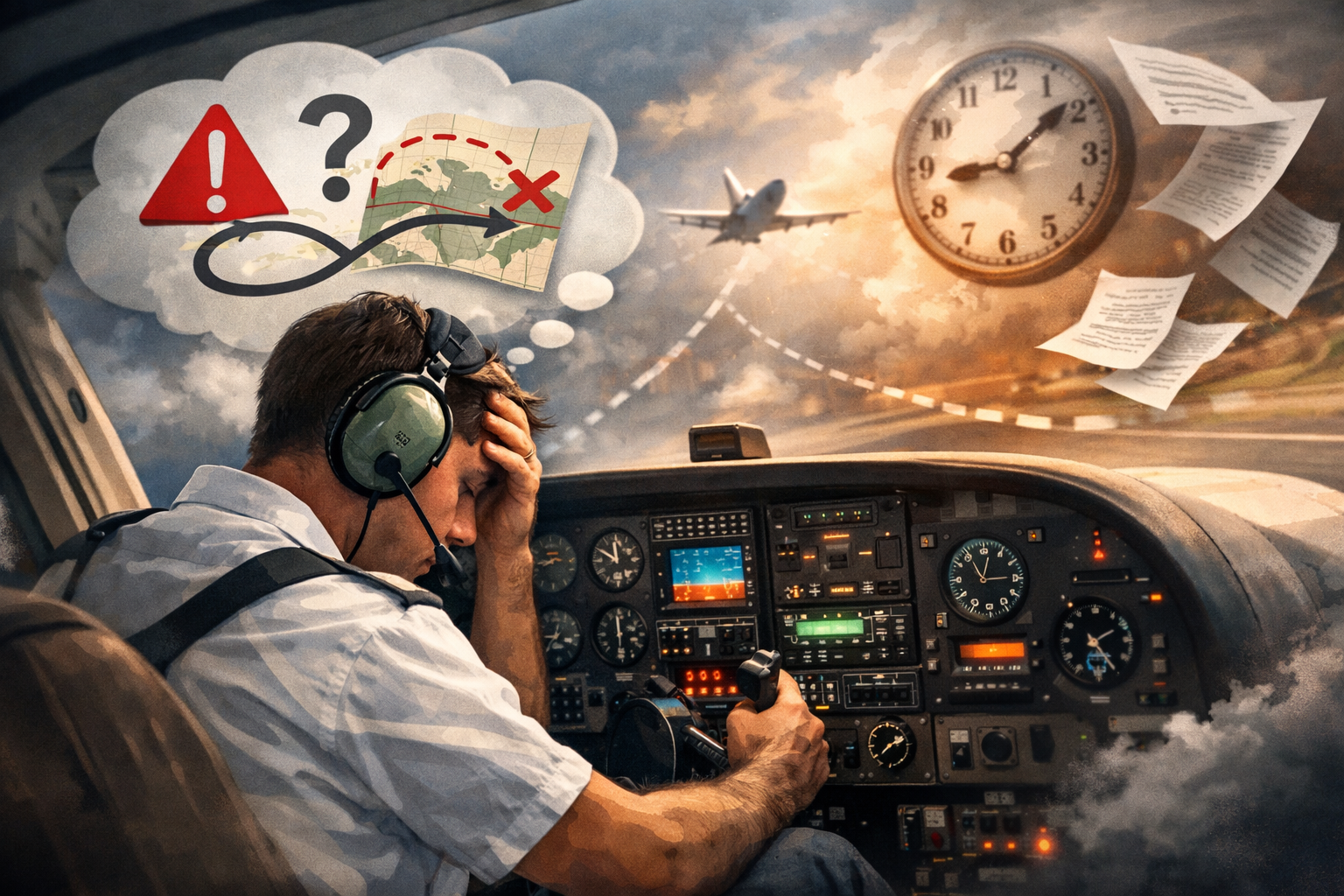
After figuring out how to do my Power Idle approach I still had 1 issue that prevented me from progressing and taking my skill test. I was flying inconsistent. Sometimes I would fly well within tolerances for PPL, always ahead of the plane, making good decisions. But then for a yet unknow reason I would have a bad day. Not flying unsafe but tolerances would seem to fly out the door. The basics would become challenging and mistakes would pile up.
I spent a lot of time flying with the Chief Flight Instructor and It got so bad that I was sure that he was about to give up on me. We would debrief bad flights and he would repeat the same feedback. But for some reason I would seemingly randomly make the same mistakes.
It took a lot of introspection and a few very honest and vulnerable debriefs to eventually discovery my biggest mistake.
What would happen is that I would fly and then some small mistake would happen. Exceeding tolerance by a few feet, forgetting my call sign on a ATC call, getting lost for a moment navigating. None of these were critical or unsafe but for some reason I would get fixated on fixing these mistakes. I would focus so much on keeping altitude that my heading would be off by 15° or I would just forget to do any checks or procedures.
A bounce on landing would basically mean the end of circuit training as for the rest of that session I would be all over the place. That bounce affecting my Circuit geometry, Checklist and procedures. I would be slow on Final as Maybe I was trying to land too fast or miss the centreline completely as I am so focused on my flare that the centreline became irrelevant to me.
We debriefed and I chair flied the next flight focussing on the specifics of what I did wrong and not seeing the bigger mental problem that was, in hindsight, glaringly obvious. This was also nearly impossible for my FI to discover. This fixation is a internal process and the external manifestation looks like a lack of skills.
I was convinced that my Lesson 1 Stick and Rudder skills were completely lost. That I did not know my procedures or my aircraft good enough, but never stopped to look at the mental state I was in.
Eventually after multiple Honest and often brutal debriefs, I realized that This all happened after I made a mistake, and normally a mistake that would take me out of tolerance for obtaining my PPL. I got hung up on flying good enough for the few defined parameters required in the Skill test that I completely lost sight of what holding a PPL actually means.
It's more than just Flying good enough to pass a Skill Test. It is being able to adapt, realizing mistakes and moving on. Learning from mistakes without letting them define the rest of your flight. Debriefing after the flight not during climb out.
What was holding me back for not skill by pilotage.
I though I was always really critical of my flying skill during my training, always debriefing honestly and very self critical. I pride myself on allowing my Instructors to be as critical as required without letting emotions get in the way.
But I was never critical about my mental state. The Chief Flight Instructor held me back from my Skill test 4 times and The last time I nearly cried.
It took these setbacks and introspection to show me how important the mental side of flying is. After I finally learned how to fly a proper power-idle approach, one issue still prevented me from progressing to my skill test: inconsistency.
Some days I flew well within PPL tolerances — ahead of the aircraft, making good decisions, staying mentally organised. Then, for reasons I didn’t understand, I would have a bad day. Nothing unsafe, but tolerances seemed to evaporate. Basic tasks became difficult and mistakes started to stack.
I spent many hours flying with the chief flight instructor. At one point I was convinced he was about to give up on me. We would debrief poor flights and he would repeat the same feedback. Yet I kept making the same errors, seemingly at random.
It took a lot of introspection and several very honest, vulnerable debriefs to finally recognise what was really happening.
A small mistake would occur — drifting a few feet off altitude, missing my callsign on an ATC call, momentarily losing my place in navigation. None of these were unsafe. But I would fixate on correcting that single error. I would concentrate so hard on holding altitude that my heading would wander 15°, or I would become so focused on one parameter that I simply stopped running checks and procedures.
A bounced landing could effectively end the rest of a circuit session. After the bounce I would be mentally stuck on it. Circuit geometry deteriorated, checklists slipped, approaches destabilised. I might come down final too slowly because I was trying to avoid another bounce, or drift off the centreline because all my attention was consumed by the flare.
We debriefed. I chair-flew the next lesson focusing on the specific technical mistakes — but I missed the larger mental pattern, which in hindsight was obvious. This was also difficult for my instructors to diagnose. Fixation is internal; from the outside it just looks like inconsistent skill.
I became convinced I had somehow lost my basic stick-and-rudder ability. That I didn’t know my procedures or my aircraft well enough. I never considered the mental state I was creating for myself.
Eventually, after multiple frank debriefs, I recognised the trigger: everything started the moment I exceeded a tolerance. The fear of not being “good enough” for the skill test took over. I became so focused on meeting test parameters that I forgot what holding a PPL actually means.
It isn’t flying perfectly.
It’s adapting, recognising mistakes, and continuing safely.
It’s learning from an error without letting it define the rest of the flight.
The debrief belongs after landing — not during climb-out.
What was holding me back was not piloting skill.
I had always been very self-critical in training. I prided myself on honest debriefs and on accepting direct feedback from instructors without defensiveness. But I had never examined my mental process in flight.
The chief flight instructor postponed my skill test four times. The last time, I nearly cried.
Those setbacks forced the real lesson: flying is as much mental discipline as technical skill. Once I stopped trying to fly perfectly and started flying continuously, my consistency returned — and with it, my confidence.
PPL Training Stats
Duration: 3 Years 1 Month
Time: 112 Hrs (100 Duel and 12 Solo)
Landings: 255